


How Zheng Qinwen’s US Open Prize Money Is Calculated After Taxes and Expenses

12/09/2026 10:49:00 NeNaZavode
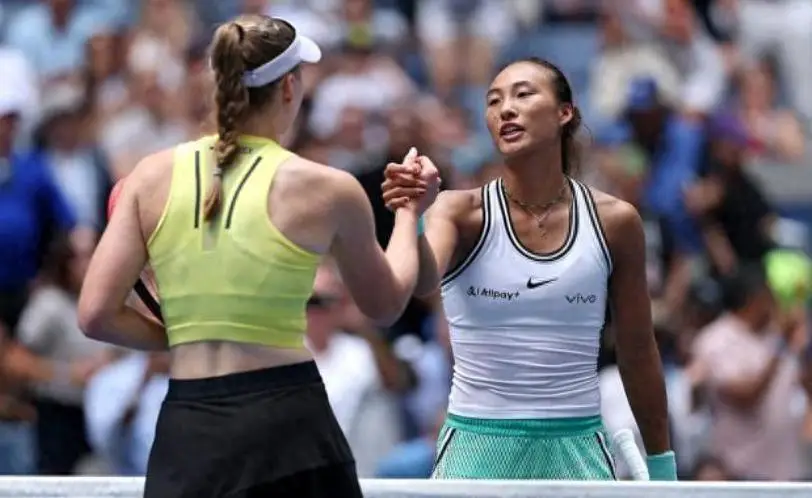
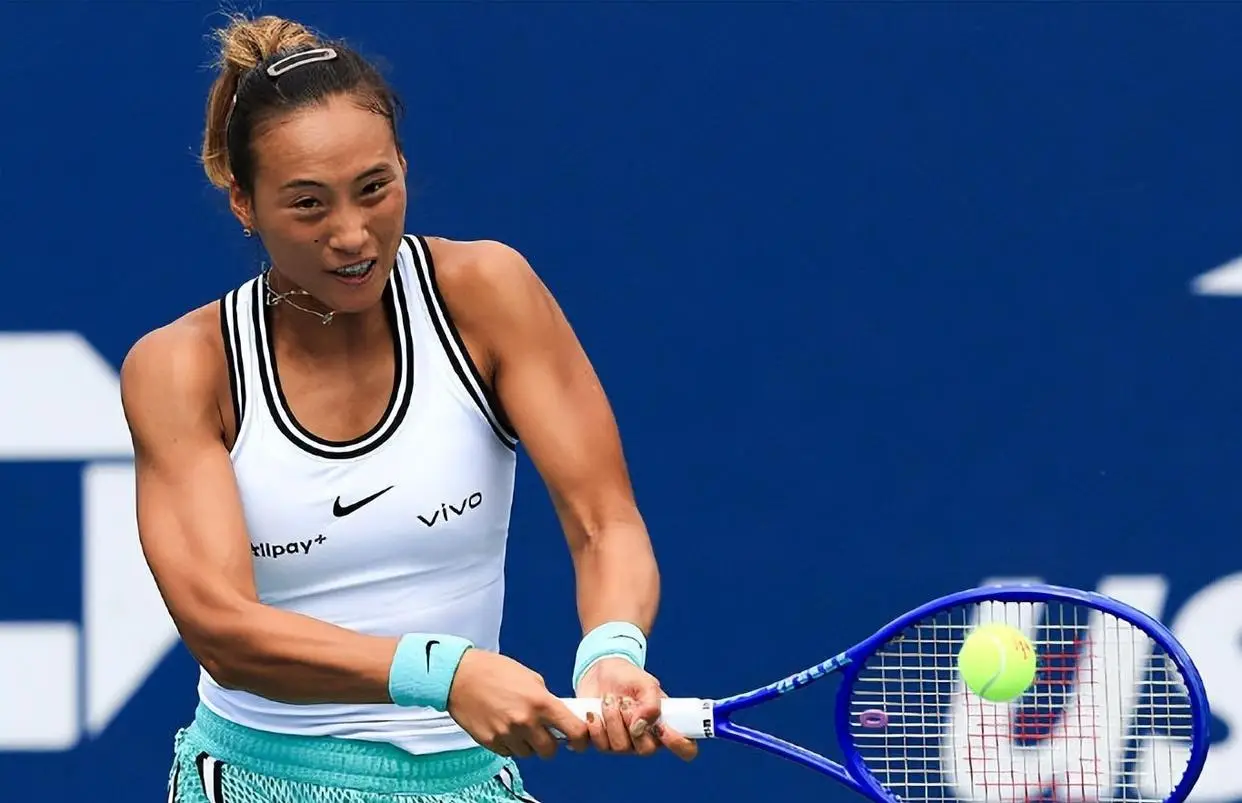
In the US Open main draw match against Swiatek, Zheng Qinwen fell behind 0-5 before winning seven consecutive games to take the first set. She started from three qualifying rounds, advanced all the way to the quarterfinals, and lost to Rybakina in a three-set quarterfinal match. Her listed prize money was $926,000, which some media outlets converted to about 6.21 million yuan based on exchange rates.
The money does not go entirely into a player’s personal account immediately after the match. The 2026 US Open has a total prize pool of $108 million, with qualifying rounds offering $32,000, $48,000 and $66,000 across three stages for a combined $146,000, while the main-draw quarterfinal prize is $780,000, bringing the total to $926,000.
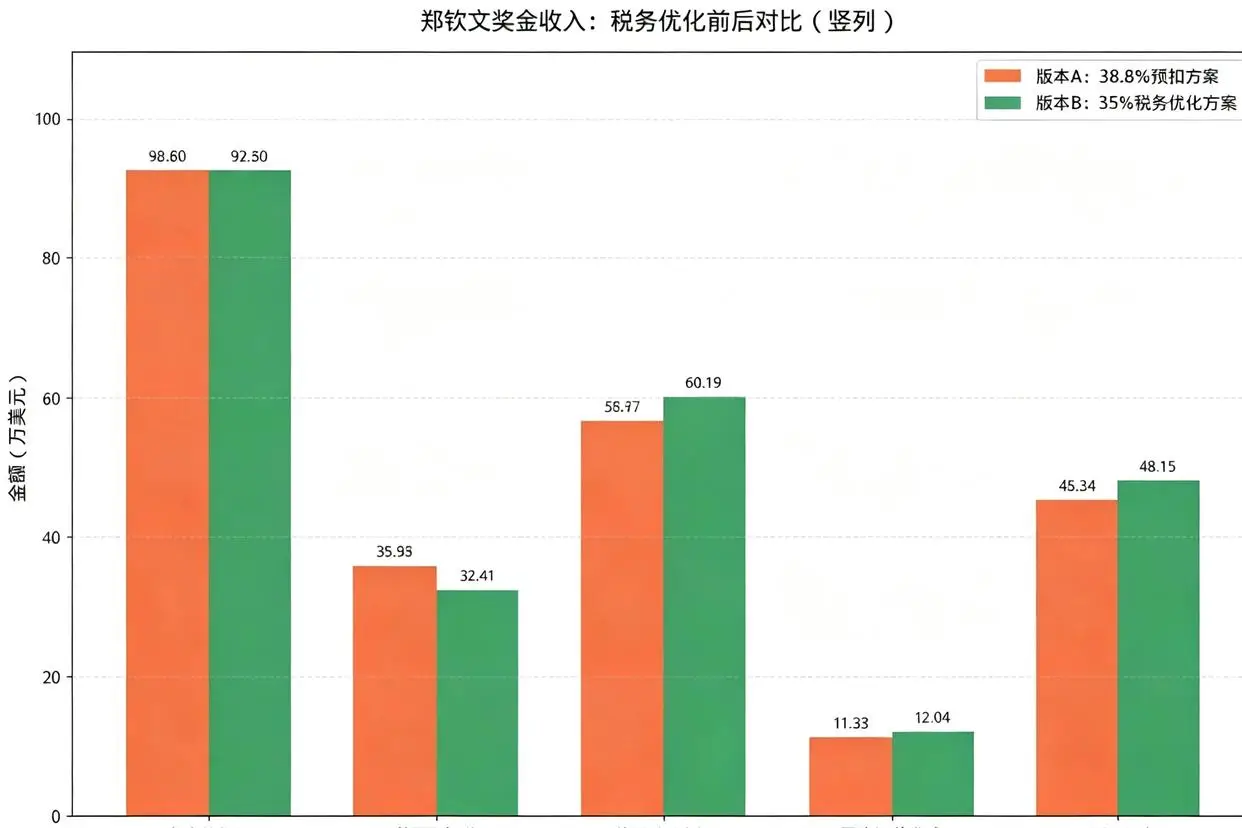
The US Open is held in New York, and prize money earned by foreign non-resident athletes is treated as U.S.-source independent personal service income. The IRS generally withholds 30% of gross income for non-resident independent personal service income. Applying a 30% rate to $926,000 results in about $277,800 in federal withholding, leaving $648,200.
New York State also calculates a separate layer of tax. Non-residents are taxed only on New York-source services, with a top marginal state tax rate of 10.9%. Using 8.8% as a simplified estimate gives about $81,500 in state tax; using the 10.9% upper rate gives about $100,900. Combined with the 30% federal withholding, simple withholding would be around 38.8% to 40.9%, leaving $547,300 to $566,700.
High-earning players are not necessarily subject to a fixed 30% withholding. The IRS has a CWA central withholding agreement program, under which non-resident athletes can submit schedules, income budgets and documented expenses, allowing withholding to be recalculated based on estimated net income using progressive tax rates. Travel costs, New York accommodation, training court rental, rehabilitation equipment and some team salaries can be submitted as expense materials.
CWA does not eliminate taxes; it makes withholding closer to the actual tax burden. If the documents and budget withstand review, withholding can be lower than 30% of gross income; if the materials are insufficient, the rate may be adjusted back upward. For a quarterfinal-level result, recalculating based on net income could lead to a post-tax amount around $600,000, but it is not a fixed outcome.
Tennis players do not receive monthly salaries from clubs. For a player at Zheng Qinwen’s level competing at the US Open, the head coach, fitness staff, rehabilitation team, practice partners, video analysts, agents and translators all require separate payments. She arrived in New York before qualifying and remained through the main draw and quarterfinal period into September, with ongoing costs for hotels, transportation, courts and medical supplies.
Full text
When allocating single-event costs against prize money, the industry often uses 15% to 20% as a scenario estimate: 15% for incremental costs of this tournament alone, and 20% for full team operations and extended preparation. Under a CWA scenario, about $600,000 after tax would become about $510,000 after a 15% deduction and about $480,000 after a 20% deduction. Under default withholding, $566,700 after tax would become about $453,400 after a 20% deduction. Based on an exchange rate around 7 cited by some media outlets, these figures correspond to roughly 3.2 million to 3.4 million yuan and about 3.17 million yuan respectively.
Whether additional tax is required after returning home depends on individual resident foreign income rules. Chinese tax residents must include this US Open income in annual tax filing, and U.S. federal and state taxes already paid can be used for foreign income tax credits with forms such as 1042-S and payment records. The credit does not mean China automatically recognizes the full amount paid in the United States; limits are calculated by country rather than by individual income item. If U.S. taxes paid are below the corresponding Chinese limit, the difference is payable; amounts exceeding the limit may be carried forward for up to five subsequent tax years.
For a quarterfinal result with $926,000 in prize money, if U.S. taxes are effectively paid at around 35% to 39%, the burden would generally exceed the corresponding Chinese comprehensive income tax level, leaving limited room for additional payment in China. If CWA significantly lowers U.S. tax or the annual domestic and overseas income structure is unusual, a new calculation under Chinese limits would be required.
During this run from qualifying to the quarterfinals, Zheng Qinwen added 482 WTA points, moved back to No. 52 in the live rankings, and can directly enter the main draws of future Grand Slams and higher-level tournaments instead of starting from qualifying. The listed prize money is 6.21 million yuan, but the final net income depends on withholding arrangements, documented costs and team contracts, so the two figures are not the same.

 Links
Links
 Contact